
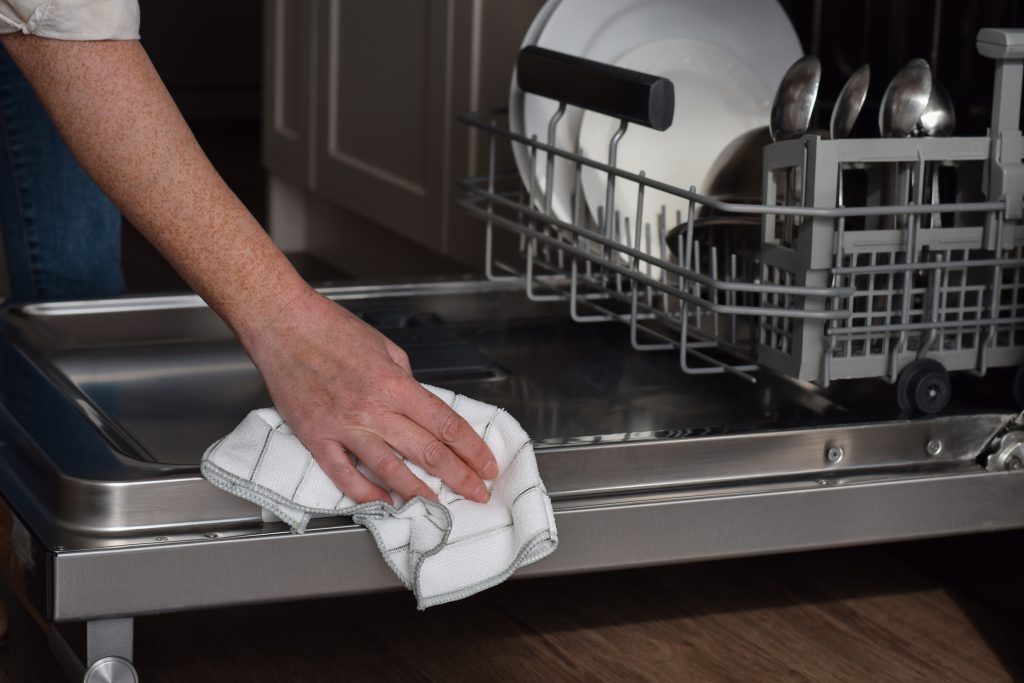
You open the dishwasher expecting clean plates. Instead, you find stuck-on food, filmy glasses, and gritty bowls. Furthermore, you ran a full cycle — so what went wrong? A dirty dishwasher after a complete wash is one of the most common appliance complaints Quick & Pro Appliance Repair receives. Fortunately, most causes have clear fixes.
Why Your Dishwasher Leaves Dishes Dirty
Several components must work together to produce clean dishes. Specifically, the spray arms, water inlet valve, detergent dispenser, and filter all play critical roles. When any one of them fails, wash quality drops noticeably.
The most frequent culprit is a clogged spray arm. These rotating arms spray pressurized water across every rack. However, mineral deposits and food debris block the small holes over time. Consequently, water pressure drops and dishes on the top rack especially come out dirty. A professional dishwasher repair technician can flush and clear spray arms in minutes.
The Filter Problem Most Homeowners Miss
Nearly every modern dishwasher uses a self-cleaning or manual filter at the bottom of the tub. Quick & Pro Appliance Repair technicians find that manual filters often go uncleaned for months or even years. Furthermore, a clogged filter traps food particles and recirculates dirty water across your dishes with every wash cycle.
Cleaning the filter takes less than five minutes. First, locate it at the bottom of the tub — usually near the spray arm. Next, twist and lift it out according to your model’s instructions. Then, rinse it under warm running water and use a soft brush to remove stuck debris. In addition, run a hot water rinse cycle immediately after reinstalling it.
Low Water Temperature Ruins Every Cycle
Water temperature directly affects how well detergent activates and how thoroughly grease breaks down. Specifically, most dishwashers need water between 120°F and 130°F to wash effectively. However, if your home’s water heater runs cooler than that, the detergent never fully dissolves.
Therefore, run the hot water tap at your kitchen sink for 30 seconds before starting the dishwasher. This flushes cold water from the supply line and ensures hot water enters the machine from the very beginning of the cycle. Furthermore, check your water heater’s temperature setting and raise it to at least 120°F if it currently runs lower.
How Kitchen Habits Affect Wash Results
How you load the machine matters as much as the machine itself. Dishes facing inward, overlapping bowls, and glasses placed at an angle all block water from reaching every surface. Consequently, you pull out half-clean dishes no matter how good the machine is.
Furthermore, grease buildup inside the dishwasher tub itself reduces cleaning power. Running a hot cycle with a cup of white vinegar on the top rack once a month cuts through interior grease effectively. In addition, keeping your kitchen equipment in good overall shape helps. For example, a faulty stove repair left unaddressed can generate excess grease splatter that makes your dish load heavier and harder to clean.
Detergent Problems You Might Not Expect
Using the wrong amount of detergent causes both under-cleaning and over-sudsing. Specifically, too little detergent leaves grease behind. Too much creates excess foam that actually cushions food particles instead of blasting them away. Furthermore, old or clumped detergent loses effectiveness quickly — especially in humid kitchens during summer.
Switch to detergent pods if you currently use powder or gel, since pods deliver a consistent dose every time. In addition, store detergent in a cool, dry cabinet away from the dishwasher itself. Heat and steam degrade detergent faster than most people realize.
When Dirty Dishes Become a Bigger Problem
A dishwasher that consistently fails to clean poses a hygiene risk. Bacteria survive on food residue left on dishes after a cycle. Therefore, if your machine keeps producing dirty results despite cleaning the filter and adjusting the loading pattern, a mechanical issue likely needs attention.
Furthermore, a full kitchen appliance checkup makes sense when one machine struggles. Quick & Pro Appliance Repair also handles fridge repair as part of a comprehensive kitchen service visit. Catching a refrigerator issue early prevents food spoilage that adds to the dishwasher’s workload.
Other Appliances That Deserve Attention
While you focus on kitchen appliances, your laundry room deserves equal attention. Specifically, scheduling a washer repair inspection alongside a dishwasher service visit maximizes your technician’s time. Similarly, a dryer repair check ensures your laundry system runs safely and efficiently through the busy summer season.
Quick & Pro Appliance Repair handles multi-appliance service visits regularly. Therefore, one call can cover your entire home and save you multiple trip fees.
The Bottom Line
Dirty dishes after a full cycle almost always point to one of five issues: a clogged filter, blocked spray arms, low water temperature, poor loading habits, or degraded detergent. Consequently, work through this checklist before scheduling a service call. However, if the problem persists, Quick & Pro Appliance Repair offers fast diagnostics and same-day repairs across San Fernando Valley.
Frequently Asked Questions
Q: How often should I clean my dishwasher filter? Quick & Pro Appliance Repair recommends cleaning a manual filter once a month. If you run the dishwasher daily or wash heavily soiled pots, clean it every two weeks for best results.
Q: Can hard water cause dirty dishes even when the machine works perfectly? Yes. Hard water leaves mineral deposits on dishes and inside the machine. Therefore, use a rinse aid every cycle and run a descaling treatment with citric acid or a commercial dishwasher cleaner monthly.
Q: Why do my glasses come out cloudy even though the rest of the dishes look fine? Cloudy glasses usually indicate hard water etching or detergent buildup, not a mechanical failure. Using a rinse aid and reducing detergent quantity often resolves cloudiness within a few cycles.
Q: Is it worth repairing a dishwasher that’s over ten years old? It depends on the repair cost. If the fix costs less than half the price of a comparable new unit, repair makes financial sense. Quick & Pro Appliance Repair always provides an honest quote before starting work.
Q: What is the most common dishwasher repair in San Fernando Valley? Spray arm replacement and pump cleaning top the list. Both repairs are affordable and typically finish within one service visit.




