
We all rely on our kitchen appliances to keep our homes running smoothly. There is nothing quite like the convenience of loading up the racks after a big family dinner and letting the machine do the hard work. However, you might notice that your appliance is taking much longer than it used to. When a cycle that usually takes an hour stretches into three, it can be very frustrating. At Quick & Pro Appliance Repair, we believe that understanding your machine is the first step toward a fix. If you find yourself waiting all night for clean plates, there are several common reasons why this happens.
The Role of Water Temperature and Sensors
One of the most frequent reasons for a long cycle involves the temperature of the water entering the unit. Most modern dishwashers require the water to reach a specific heat level to activate the detergent and properly sanitize your dishes. If your home hot water tank is set too low, or if the heating element in the machine is struggling, the cycle will pause. The timer stops while the machine waits for the water to get hot enough.
Our team often finds that a faulty thermostat or a failing heating element causes these delays. The machine’s sensors are very smart. They will not move to the next stage of the wash until the internal environment is perfect. If you suspect the heating system is failing, you may need a professional dishwasher repair to get your kitchen back on track. We also suggest running the kitchen sink faucet until the water is hot before you start a cycle. This ensures the machine starts with hot water right away.
Clogged Filters and Spray Arms
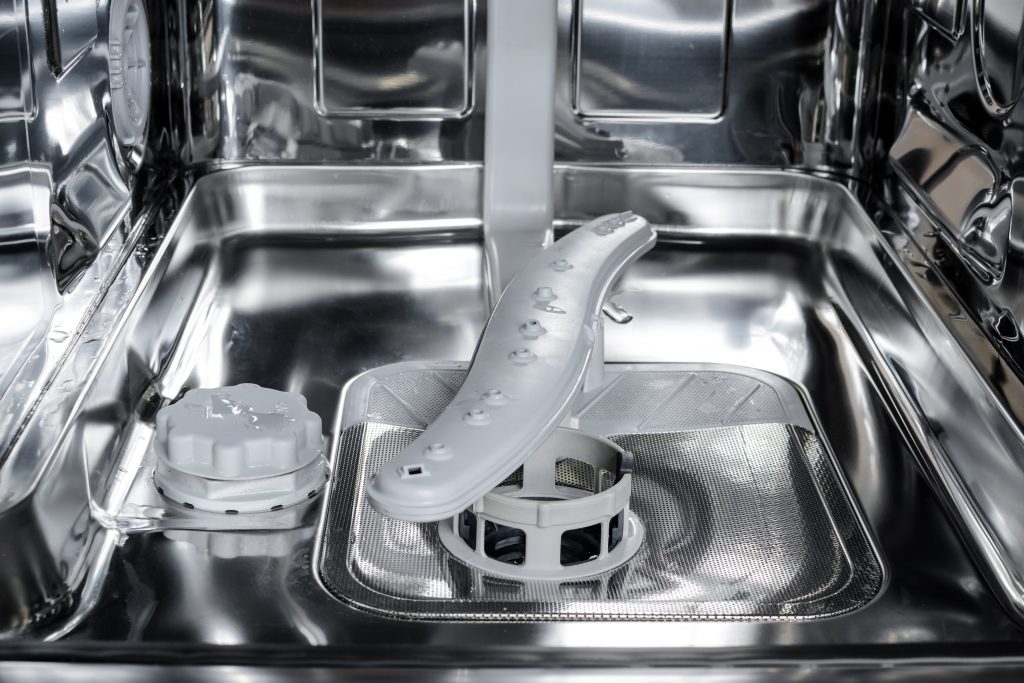
If your dishes are coming out dirty and the timer is running long, you might have a circulation problem. Every machine has a filter designed to catch food particles. Over time, this filter can become clogged with grease and debris. When the filter is dirty, the water cannot circulate efficiently. Our professional technicians recommend cleaning your filter at least once a month to prevent build-up.
Similarly, the spray arms have tiny holes that can get blocked by hard water deposits or small bits of food. When these holes are blocked, the machine has to work harder and longer to get the dishes clean. While we often focus on things like fridge repair to keep food fresh, maintaining your dishwasher is just as important for kitchen hygiene. If the water cannot spray freely, the sensors may trigger extra rinse cycles to compensate for the lack of cleanliness, adding a lot of time to the total run.
Energy Efficient Settings and Modern Technology
It might surprise you to learn that your dishwasher might be long by design. Modern appliances are built to be much more energy-efficient than older models. To save water and electricity, newer machines use less water but circulate it for a longer period. While an old machine might have used a lot of water and finished in forty minutes, a new eco-friendly model might take two or three hours.
If you have recently selected a “Sensor Wash” or “Eco-Mode,” the machine is likely doing its job perfectly. The sensor wash evaluates how dirty the water is and adjusts the time accordingly. If you have a very heavy load, the machine will naturally add more time. However, if the time increase is sudden and dramatic, it is worth looking into. At Quick & Pro Appliance Repair, we see many customers who think their machine is broken when it is simply trying to save them money on their utility bills.
Problems with Water Inlet and Drainage
The speed at which your dishwasher fills and drains also dictates the cycle length. If the water inlet valve is partially restricted by hard water minerals, the machine will take much longer to fill up to the necessary level. You can think of it like filling a bucket with a straw instead of a hose. The machine won’t start washing until it detects enough water.
On the other end, drainage issues can cause the cycle to stall. If the drain hose is kinked or the garbage disposal is clogged, the water exits the machine slowly. Our team sees this often when people have recently had work done under their sink. If you are experiencing issues with other appliances, such as needing a dryer repair or a cooktop repair, it is a good idea to have a technician look at your entire kitchen setup. Slow drainage is not just a time waster; it can also lead to leaks and standing water.
Hard Water Build-Up and Scale
In many areas, hard water is a silent enemy of household appliances. Calcium and magnesium can build up inside the internal hoses and valves of your dishwasher. This scale reduces the diameter of the pipes, meaning less water moves through the system. This restriction forces the machine to extend its cycles to ensure the dishes are properly rinsed.
Quick & Pro Appliance Repair recommends using a dishwasher cleaner or a vinegar rinse once a month to help break down these deposits. If the build-up becomes too severe, it can damage the internal pump. Regular maintenance is the best way to avoid a major dishwasher repair in the future. Keeping the internal components clear of scale ensures that the water flows at the pressure the manufacturer intended.
When to Call the Professionals
Sometimes, the fix is as simple as cleaning a filter, but other times, the issue is mechanical. If you have checked the basics and your dishwasher is still taking forever, there might be a problem with the control board or the motor. These parts act as the “brain” and “muscles” of the machine. When they start to fail, the timing of the cycles can become erratic.
If you are frustrated with your kitchen performance, Quick & Pro Appliance Repair is here to help. We provide expert service for all major brands and can quickly diagnose why your machine is lagging. We know how important your time is, and we want to help you get back to your routine. Whether it is a simple sensor calibration or a more complex cooktop repair, our goal is to provide a lasting solution.
FAQ
Why does my dishwasher run for 4 hours? This is often due to energy-saving settings. Modern machines use less water and lower heat, which requires more time to clean. It could also be a sign of a faulty heating element or a clogged filter that is making the machine work harder.
How often should I clean my dishwasher filter? We recommend cleaning the filter at least once a month. If you do not pre-rinse your dishes, you might need to clean it every two weeks to prevent clogs that can slow down the cycle.
Can hard water affect my dishwasher’s speed? Yes, hard water creates scale build-up in the valves and spray arms. This restricts water flow, which means the machine takes longer to fill and longer to spray enough water to clean the dishes.
Is it normal for a new dishwasher to take longer than an old one? Yes, it is very common. Newer models are designed to be more efficient. They use less power by soaking the dishes longer rather than using high-pressure, high-heat blasts of water.
Does running the hot water at the sink help? Absolutely. If you run the hot water at your kitchen sink before starting the dishwasher, the machine doesn’t have to spend as much time heating the water internally, which can shave time off the cycle.




